

Modern leadership is full of decisions where one side of a productive tension gets quietly declared obsolete. For instance, recently, Elon Musk posted on X:
“There are only engineers. ‘Researcher’ is a relic term from academia.”
(NDTV report)
Meta chief AI scientist Yann LeCun responded that this mindset risks “killing breakthrough innovation” (times of india report).
To explore this tension, we analyzed the concepts with Eye Opener (using Opposites toggle):
T = Research, A = Engineering.
The following maps were obtained:
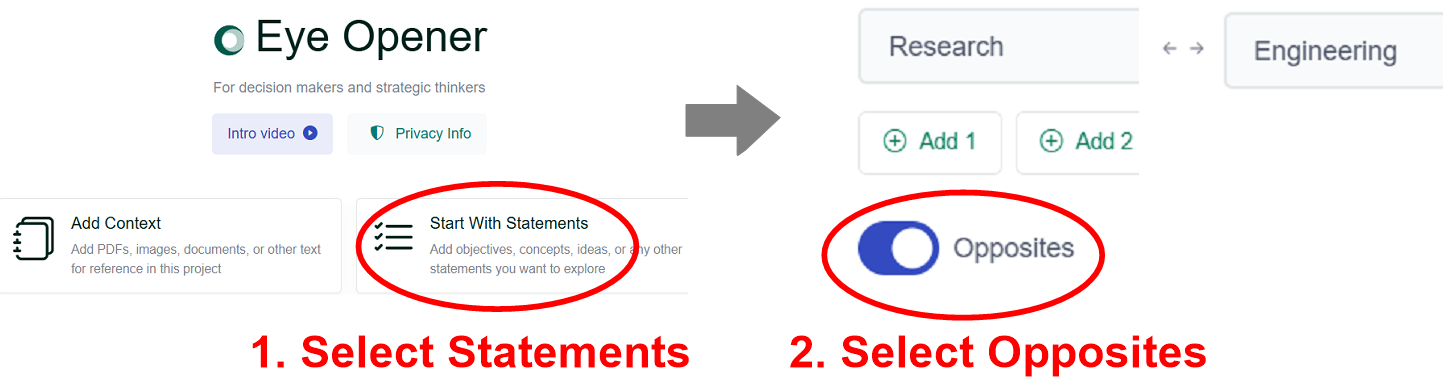
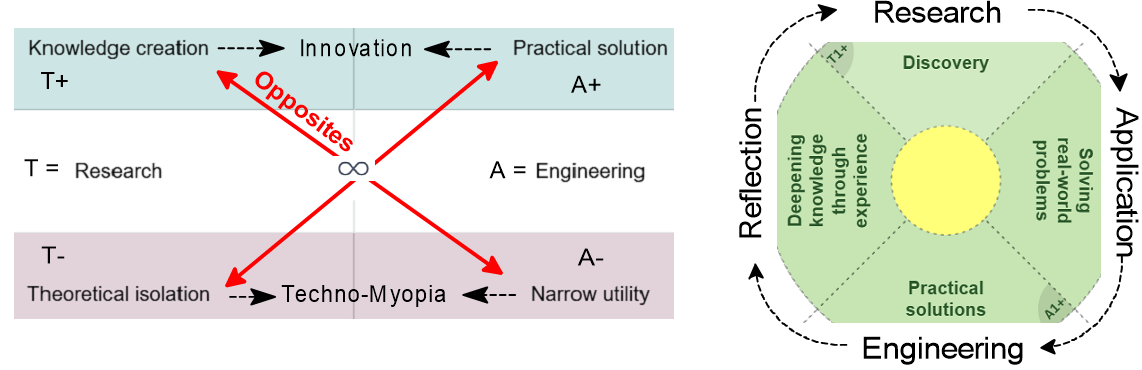
Image 1. Polarity Map and “Positive” Dialectical Wheel
Red arrows show direct oppositions between upsides of one pole and downsides of another. Too much Research yeilds theoretical isolation, while too much Engineering yields narrow utility.
The right-hand map shows a conceptual integration loop—a pattern implied in LeCun’s critique but rejected in Musk’s statement.
Multiple Polarity Analysis – Prototype Only
Further insights can come from expanding each concept into multiple alternative polarities (Development, Teaching, Strategy, etc.). Mapping these reveals where Research and Engineering can actually link, reinforce, and extend each other:
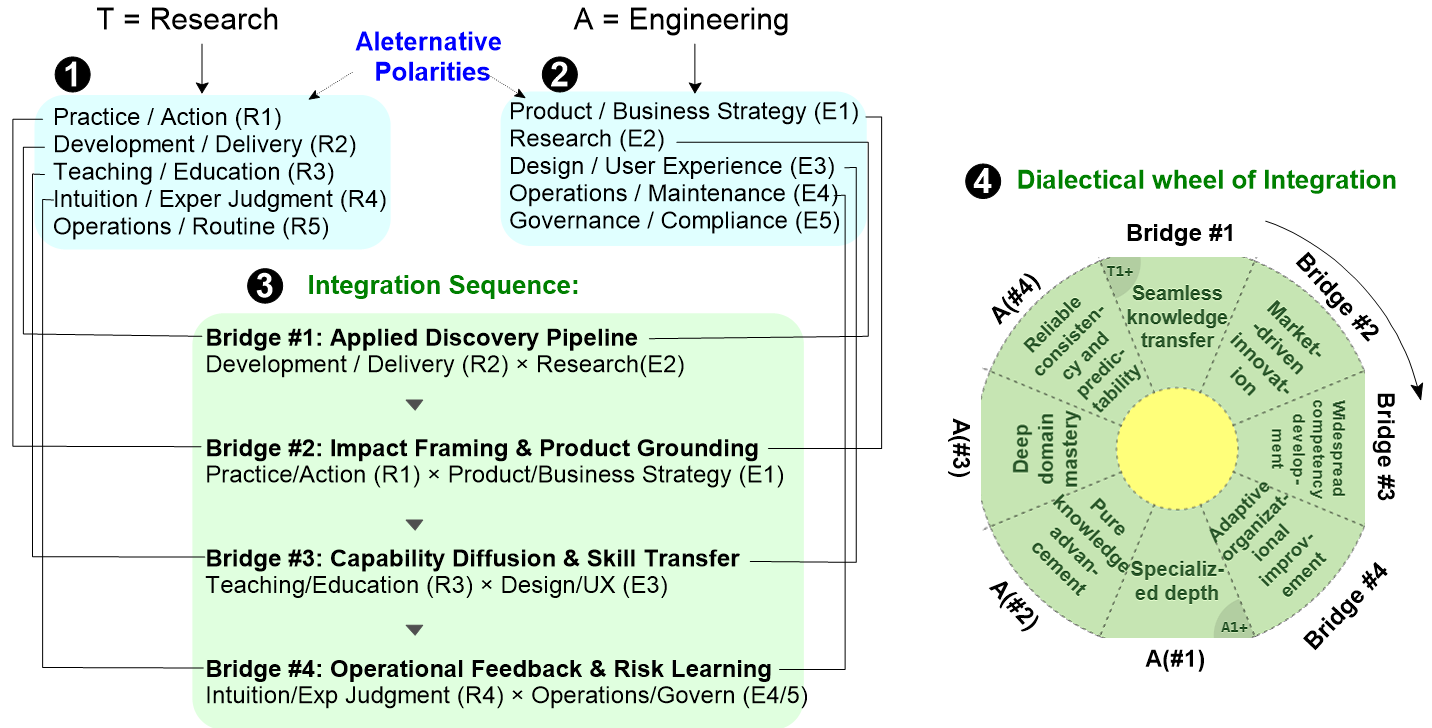
Image 2. Optimum Synthesis Suggestion
Steps 1–2 generate multiple alternative polarities. Step 3 identifies the “gluing bridges”:
- Bridge #1 unites research and engineering into a single applied discovery pipeline.
- Bridge #2 ties that pipeline to real user and strategic impact.
- Bridge #3 enables capability diffusion through teaching and design pathways.
- Bridge #4 uses operational risk and experiential feedback to drive iterative learning.
Step 4 identifies antithetical blind spots (A#1–3) that enable iterative causation. These act as guardrails against predictable exaggerations—blind spots that are easy to miss due to forward-thinking bias.
Together, this produces a far more complete causal picture than Image 1 alone.
Feedback Needed
The synthesis shown in Image 2 is not yet implemented. We are evaluating whether to add this capability — would it meaningfully simplify decision-making for you?
Unlike traditional polarity mapping, this method identifies where synthesis is possible and how to build it, including:
- How poles can be integrated into a higher-order capability.
- Which bridges make that integration practical and robust.
- Where blind spots and failure modes are likely to emerge.
- Why eliminating one pole—such as Musk’s proposal—creates fragility.
If you’d like to see how this works on your own tension or polarity (e.g., Strategy–Execution, Speed–Safety, Research–Engineering), feel free to send it to us — we can generate a synthesis map as an example.