

Every objective has a natural counterbalance that’s easy to miss. Take a simple goal: “Expand user base.” Eye Opener generates a dialectical map that shows:
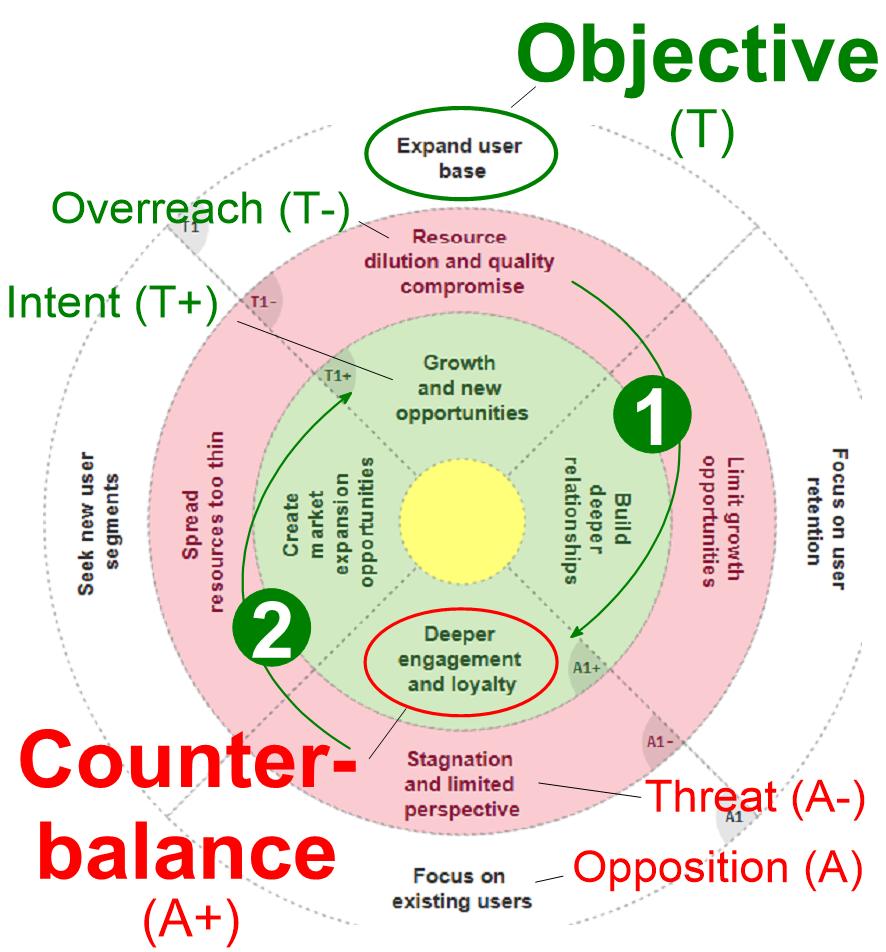
Objective (T) = Expand user base
Intent (T+) = Growth & opportunities
Overreach (T-) = Resource/quality dilution
Opposition (A) = Focus on existing users
Constructive Opposite (A+) = User Loyalty
Threat (A-) = Stagnation
In addition, it shows actions and reflections that transform negative sides of each position (T-/A-) into positive sides of opposition (A+/T+). In this case:
Step 1. Pair acquisition tactics with loyalty work: concierge onboarding, better guidance for early use, and a “quality floor” for features that affect first-run experience.
Step 2. Add guardrails: track signup growth and leading experience metrics (activation rate, first-week success), so “growth” can’t silently become T⁻.
Result: the objective is held in a healthier frame—grow and protect what makes the product worth adopting.
When Objectives Collide
Now let’s raise the complexity. Consider combining three objectives at once:
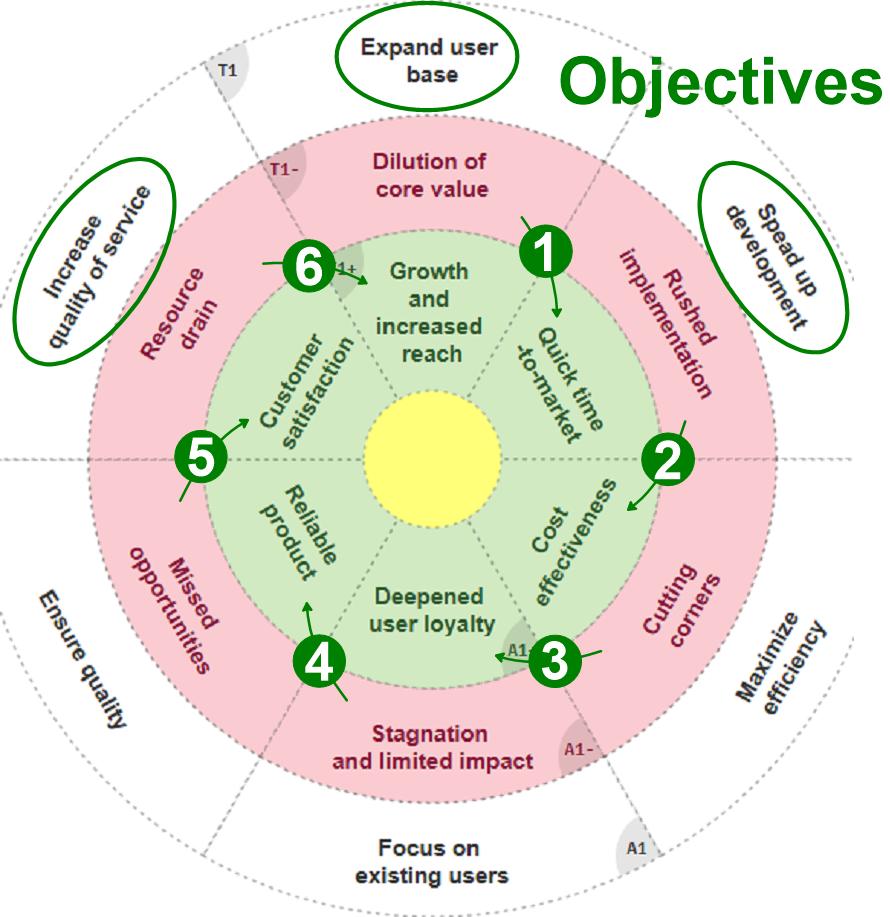
T1 = Expand user base
T2 = Improve quality of service
T3 = Speed up development
A single wheel shows where these can help—or harm—each other. For each T it suggests its antithesis (“blind spot” opposite to the original T) and arranges all components in causal order (clockwise).
Here are the six key transitions Eye Opener proposes to convert risk into momentum:
Step 1. Segment users and prioritize features for the highest-value segments. Focused demand ≠ scattered effort; development speeds up on proven use cases.
When: Right after collecting substantial user feedback, before the next cycle locks.
Step 2. Automated tests + explicit acceptance criteria. Keep velocity, kill rework; add quality gates at milestones without creating bottlenecks.
When: Immediately after sprint retros, while pain points are vivid.
Step 3. Run “UX Deep Dives” with cross-functional teams and core users. Catalog where corners were cut; fund fixes that eliminate the biggest pains and create advocacy.
When: After sprint reviews, with fresh feedback on quality trade-offs.
Step 4. Launch a Quality Ambassadors program: power users in early previews and targeted feedback. Align sprint planning to what they surface.
When: During stabilization phases, when refinement is the priority.
Step 5. MVP + staged release plan. Ship core value fast to capture the opportunity, then iterate quality guided by early adopters.
When: At project inception or right after a competitive threat emerges.
Step 6. A quality-investment framework that scores initiatives on two axes: current user satisfaction and new-user pull. Fund the work that moves both.
When: Quarterly planning—redirect perfectionism into growth-driving quality.
Feasibility and “decision digging”
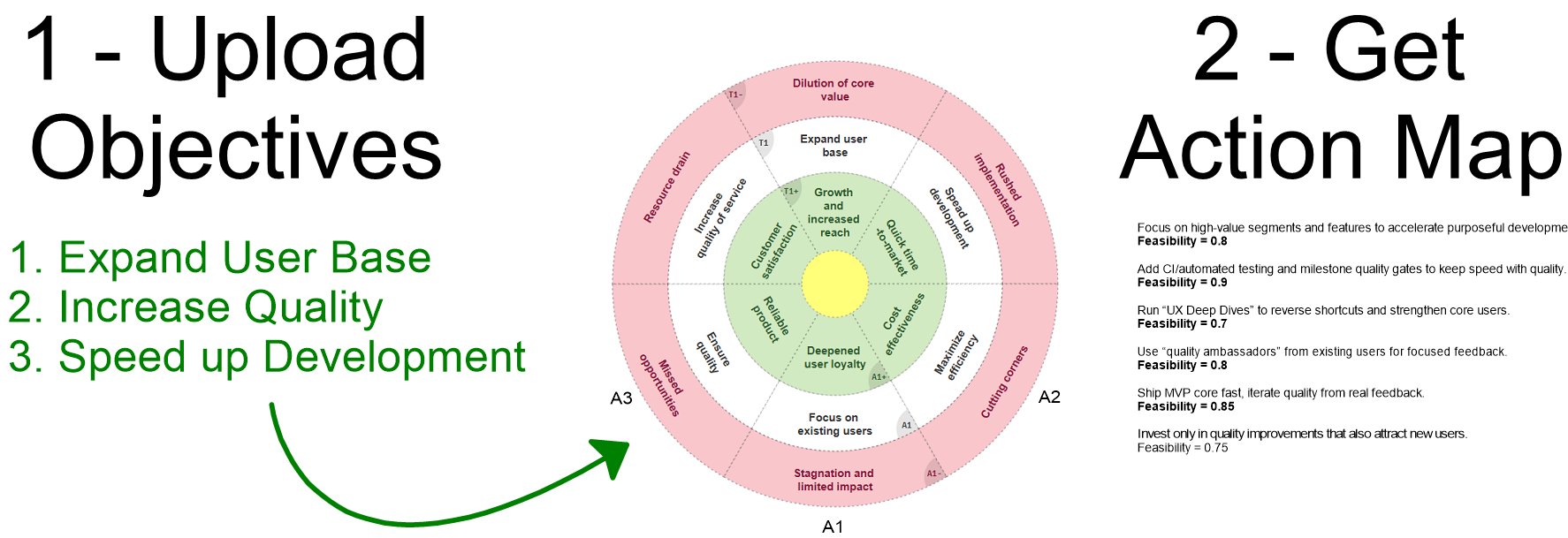
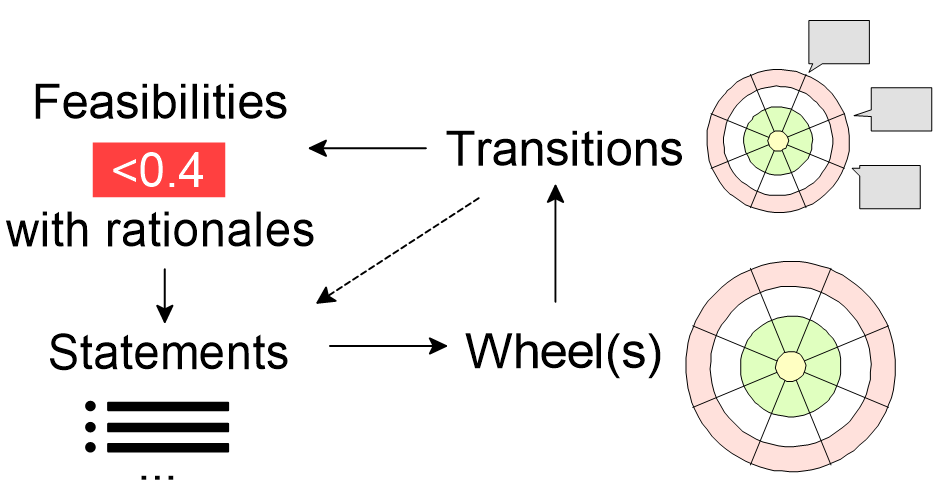
Each transition comes with a feasibility score. Low scores (e.g., < 0.4) flag hotspots. Eye Opener lets you spawn a new wheel for those transitions—zooming in until you find a high-feasibility route. The output is a compact action map: the fewest steps that safely connect your OKRs.
Call to action
Send us your active OKRs (even messy draft text). We’ll return a wheel and a 1-page action map with the top transitions, feasibility highlights, and the guardrail KPIs to add next quarter.