

“The over-weening conceit which the greater part of men have of their own abilities is an ancient evil.” — Adam Smith, 1776
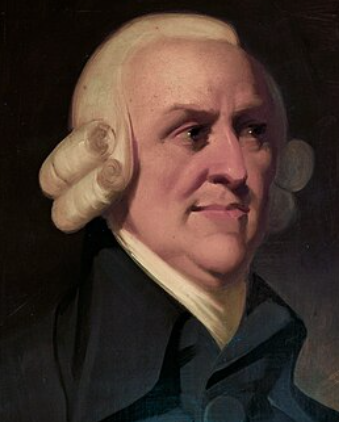
Business overconfidence is in the blood of every entrepreneur. Adam Smith saw it in merchants who over-valued their chances and under-valued the risks. Today’s leaders do the same — just consider the “fake it till you make it” ethos. Trouble begins when it’s paired with narrow framing — treating issues too narrowly.
Structured dialectic addresses both of these failures. It forces ambition to meet its counter-arguments — revealing where goals overreach and defining the guardrails that must grow with them.
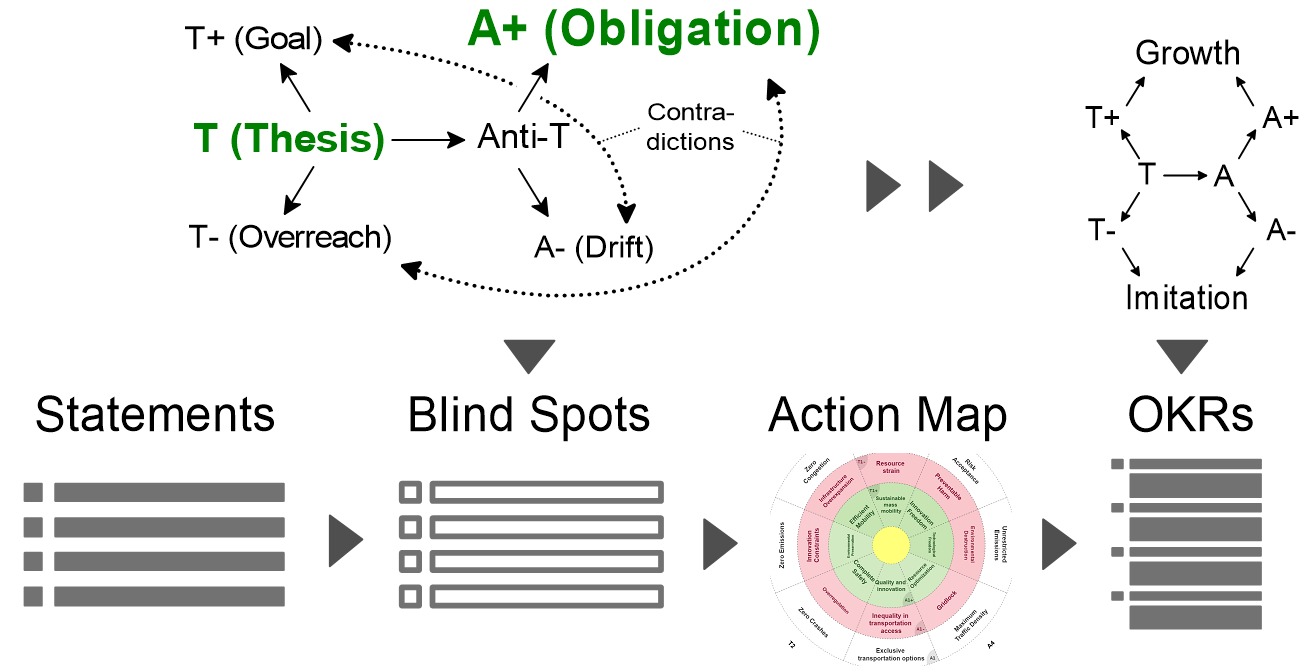
How Eye Opener applies this:
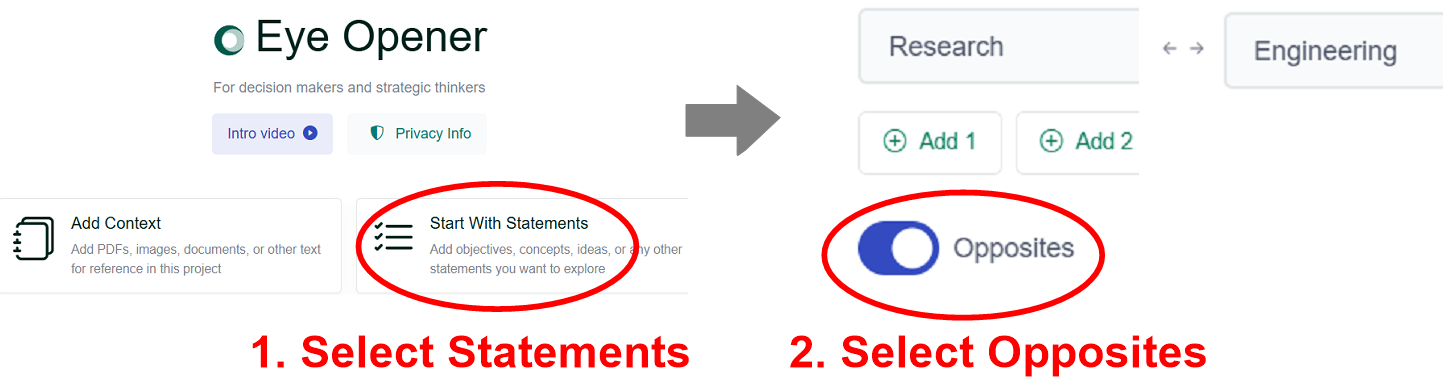
- Input your statements (OKRs, policies, missions).
- The app infers opposites and obligations automatically.
- Alternatively, when dealing with clear tensions, enter your own opposing poles.
- It builds an Action Map—smallest moves + guardrail checks.
Sleep on it. Let slow thinking make the call. Eye Opener is the trigger, the final decision is yours. (See 1-min Demo)
Examples
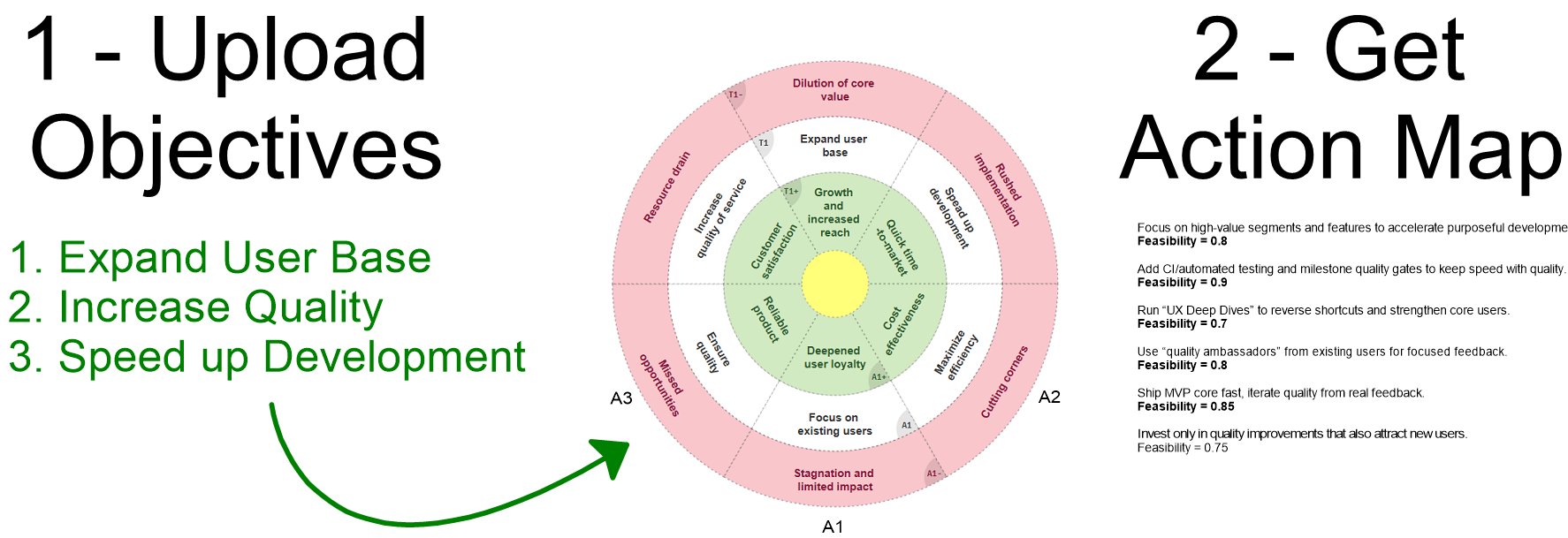
Example 1: Turn Objectives into Action Maps.
Consider objective: “Expand user base.” Eye Opener maps its counterbalance—“Focus on existing users”—and recommends two steps: pair acquisition with loyalty work and add guardrails so growth doesn’t erode quality.
In more complex cases, Eye Opener’s maps act like go/hold indicators—when to move, when to wait, what risk to watch, and which guardrail to confirm. They also help in negotiations and conflicts by revealing complementary needs and the next safe step.
Example 2: Turn Policies into Growth Maps.
Consider this policy: “You must follow strict rules”. Eye Opener maps its counterbalance, “Allow freedom,” and returns two moves: (1) keep the principle but loosen the procedure, and (2) mark stability zones (must follow) vs freedom zones (may vary) with published boundaries and reviews.
For multiple policies, Eye Opener shows how to make them reinforce rather than contradict each other, so they act as a catalyst instead of a constraint.
Example 3: The Shadow Side of Shiny Missions.
Consider GM’s mission statement: EVs for everyone and “Zero Crashes, Zero Emissions, Zero Congestion”. Eye Opener maps the opposites and the near-term sequence: more upstream emissions and extraction, tighter traffic and handover risk, and pressure toward exclusivity before the intended benefits arrive.
Eye Opener turns the mission into a one-page action map with paired thesis–antithesis metrics and guardrails—so the spotlighted goals don’t push their costs into the shadows. This map can be then used to predict Company Performance and match Ambitions with Reality
Example 4: Polarity Synthesis.
Convert any tension into a synthesis map.
For example, when Elon Musk stated: “There are only engineers. ‘Researcher’ is a relic term from academia,” Eye Opener maps Research ↔ Engineering as a polarity and reveals integration paths—bridges, blind spots, and iteration loops—that were not visible in the original framing.
Why This Matters (executive)
- Make sure your strategy is earned. Most blow-ups happen when leadership scales the story faster than the system can actually support. Eye Opener exposes those breaks before they cost you.
- Better deals, fewer regrets. Map complements and guardrail KPIs before you sign—optimize for mutual value, not optics.
- From compromise to synthesis. When talks stall, stop splitting the difference. Surface complements, design a third way, and test it with small, reversible pilots.
- Faster conflict resolution. Turn standoffs into small, testable transitions; pick facilitators by complementarity, not title.
- Bureaucracy, domesticated. Keep principles firm and procedures flexible—publish stability zones and freedom zones.
Takeaway: Eye Opener turns statements into balanced, sequenced action—OKRs, guardrails, and the next move—so you lead with confidence and leave fewer messes behind.
See the Larger Picture (visionary)
Big claims cast big shadows. Exaggeration feels like magic today; it returns as “bad luck” tomorrow. Eye Opener keeps the spell balanced: it exposes blind spots, pairs every promise with its counter-obligation, and suggests the smallest steps that turn tension into progress. That’s how leaders find better partners, defuse hard negotiations, avoid karmic debt, and trade metric theater for real prosperity—for teams, customers, and the planet.
What to Expect Next (pragmatic)
- Immediate: a one-page map per objective—one blind spot, one guardrail KPI, one next step.
- 30–90 days: fewer collisions between OKRs; cleaner governance cadences; measurable lift in retention, reliability, or cycle time (depending on focus).
- 6–12 months: better deals and partnerships (complementarity), leaner policies (outcomes over paperwork), and a culture that prizes balance over bravado.
CTA (one line): Paste 2–4 of your live objectives into Eye Opener; get a Growth/Action Map with OKRs and guardrails you can use in your next review.
See Also:
- Fixing Leadership with Struct-Dialectics
- Corporate Success or Failure
- The Four Levels of Decision Loops
- Eye Opener for Marketers & Brand Makers
- Company Preformance From Its Mission Wheel
- Matching Ambitions with Reality
- The Shadow Side of Shiny Missions
- Turn Objectives into Action Maps
- Turn Policies into Growth Maps
- Matching B2Bs with Dialectics
- Artificial Intelligence or Artificial Ignorance?