

Breaking False Certainty in Business
“The essence of the management problem is not uncertainty, but the false conviction that one’s knowledge is adequate.” — Edgar H. Schein
In our previous analysis, we exposed the psychological anatomy of False Certainty — the toxic inversion in which the pursuit of control overrides genuine growth. It hides beneath layers of fake morality and goals, and can only be broken through synchronized cycles of reckoning and probing.
When applied to business, this logic maps directly onto the Exploration vs Exploitation dilemma and the broader challenge of organizational ambidexterity:
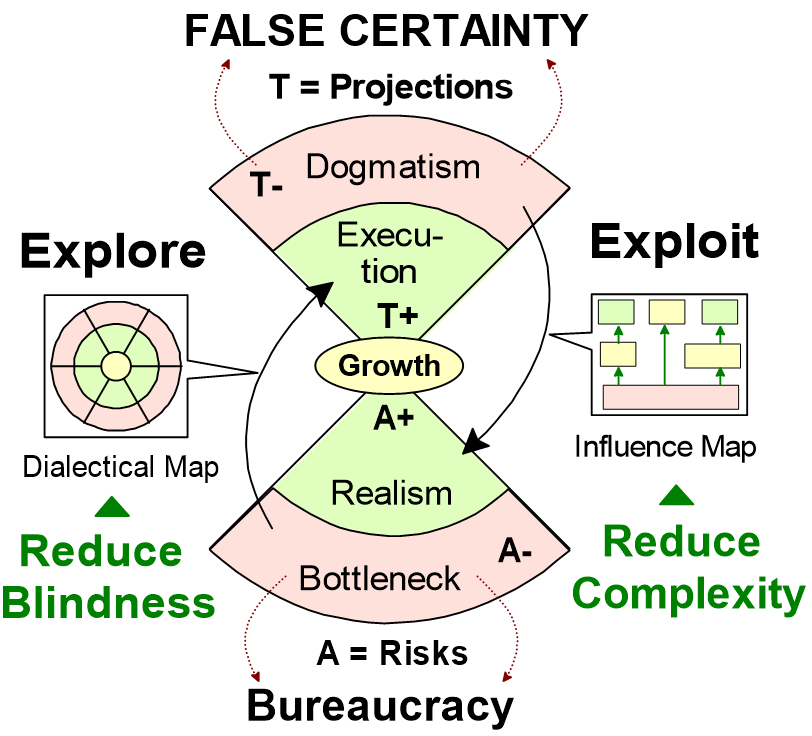
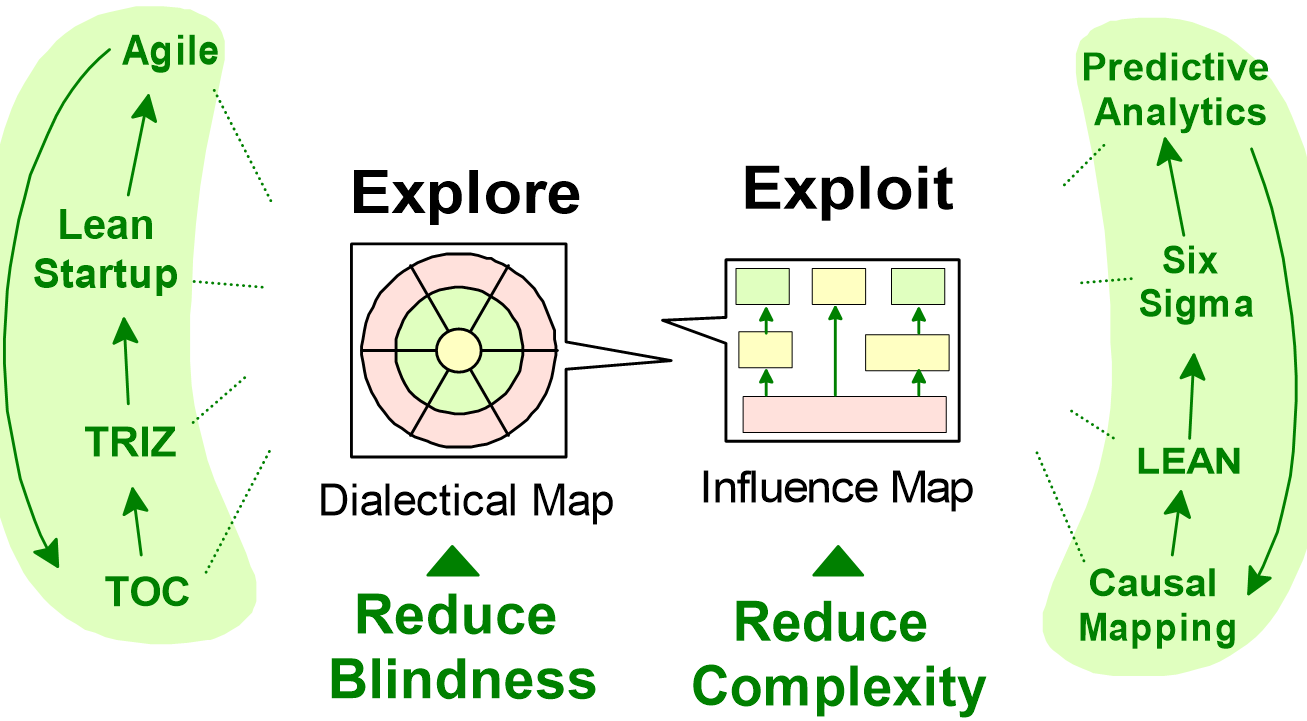
Each phase can be operationalized through a multitude of business optimization methods supporting either dialectical exploration or root-cause analysis. For example:
The following table positions different methods within this framework:
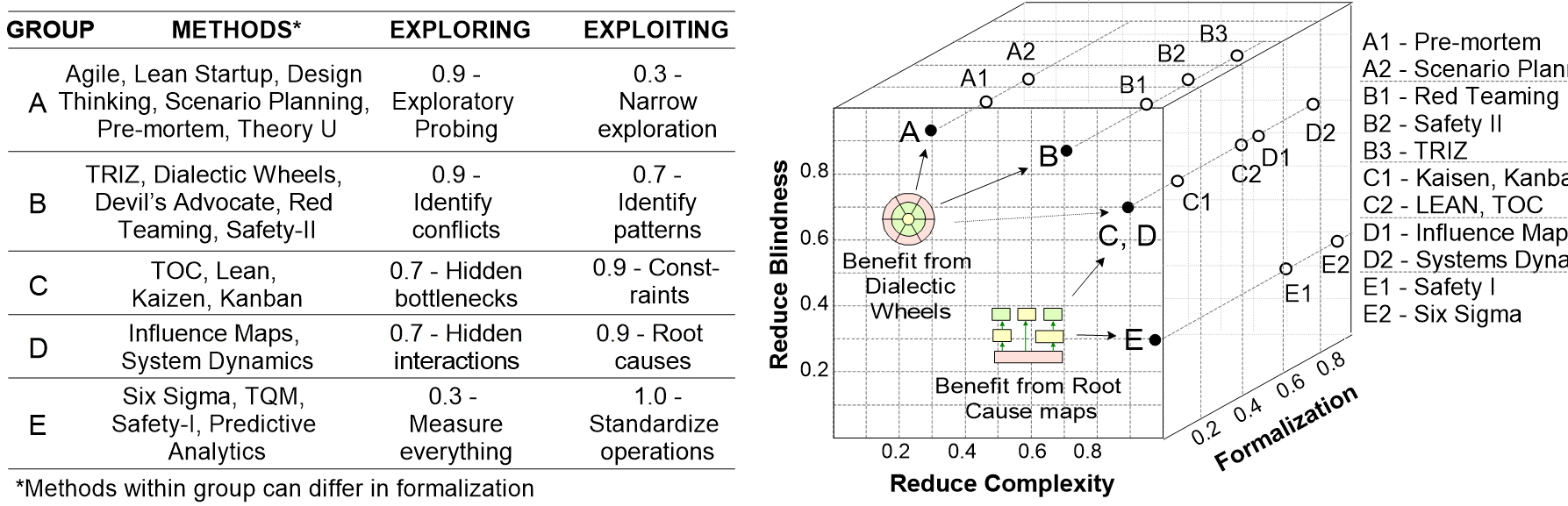
Each method contains both explorative and exploitative elements, yet none is perfectly balanced. Moreover, as methods become increasingly formalized and detail-driven (for example, Scenario Planning or Six Sigma), they risk losing sight of the broader systemic reality — reinforcing false certainty once again. For this reason, sophisticated optimization methods should remain grounded in simpler frameworks that preserve contextual awareness and structural balance.
The Missing Layer?
The above analysis suggests that business optimization should not merely support dialectical exploration and root-cause analysis, but should also be guided by them. Otherwise, detail-driven optimization risks losing the broader systemic balance that it ultimately depends upon.
Clusters A–C can benefit from Dialectical Wheels since the complementarities between opposing forces are rarely analyzed explicitly by existing methods.
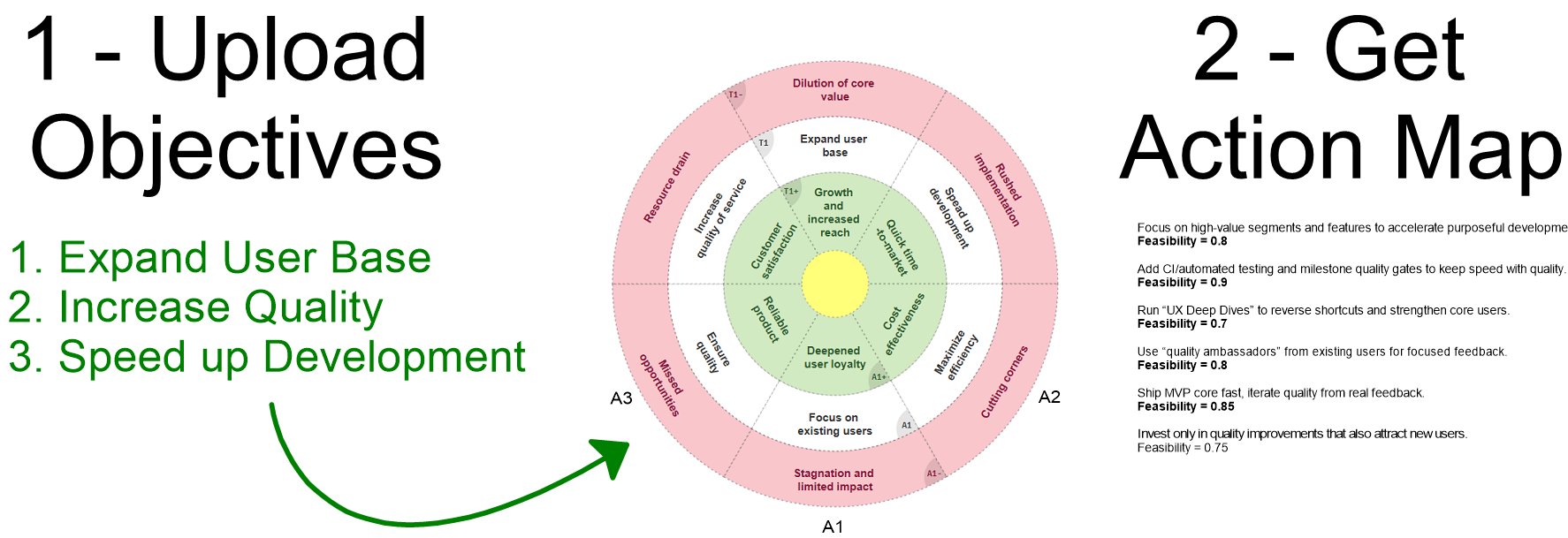
Dialectical synthesis is a prerequisite for any successful system. Yet we rarely notice it because we take it for granted. Only when it disappears under pressure and we fall into binary thinking do we realize that something is missing. Existing frameworks provide little protection against such drift (Perrow,1984). In fact, they can become optimization traps, causing us to optimize self-deception rather than reality (McGilChrist, 2009).
Clusters C–E can benefit from simplified Root Cause Maps (including various types of Issue Trees, Influence Diagrams, Power Maps, Influence Maps) that help maintain a causal perspective without collapsing into excessive detail.
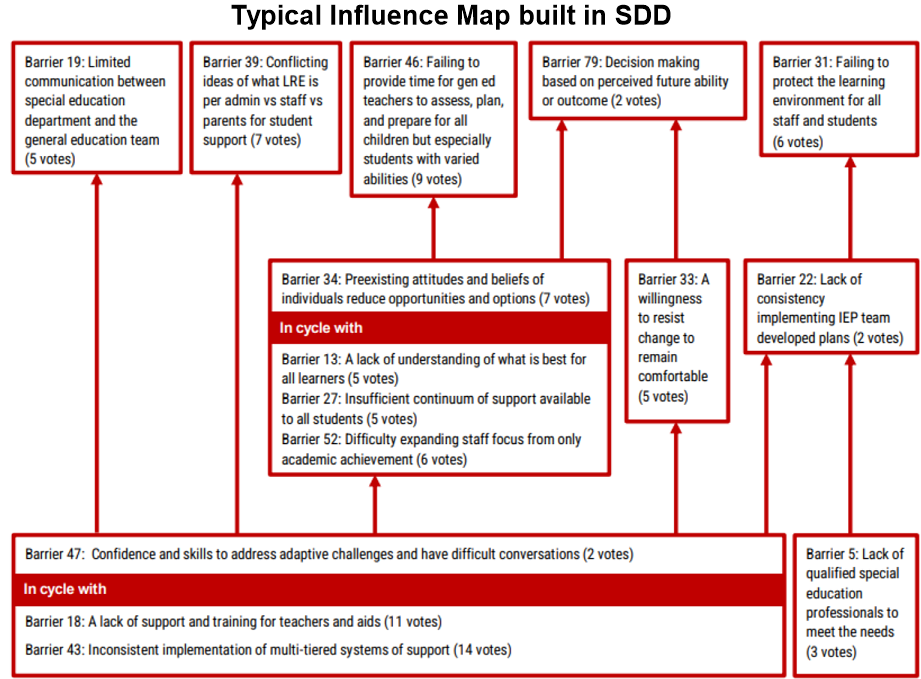
A simplified view without professional analysis can lead to superficiality. Yet professional analysis without a simplified view can lead to tunnel vision (Kahneman, 2011). For this reason, experienced practitioners validate their assumptions with people who are less immersed in the domain (Tetlock, 2005). Deep specialization and close observation are powerful, but they can also obscure broader human, operational, and systemic realities (Scott, 1998).
| Dialectical Wheels | Root Cause Maps | |
|---|---|---|
| Guide | Exploration | Exploitation |
| Preserve | Perspectival wholeness | Causal hierarchy |
| Reveal | Synthesis conditions | Governing causes |
| Prevent | False certainty | Analysis Paralysis |
| Reduce | Blindness | Complexity |
Conclusion
Business systems require an additional layer of dialectical thinking and root-cause analysis. Otherwise, optimization gradually becomes an end in itself: efficiency ceases to generate real growth, growth ceases to produce fulfillment, and success begins to undermine the very conditions that made it possible.
“Nothing fails like success.” — Kenneth Boulding